 Your Partner in Health and Wellness
Street No. 1, Bank Colony, Between Metro Pillar 1215–1216, Modinagar, Uttar Pradesh – 201204
To get the latest news about health from our experts
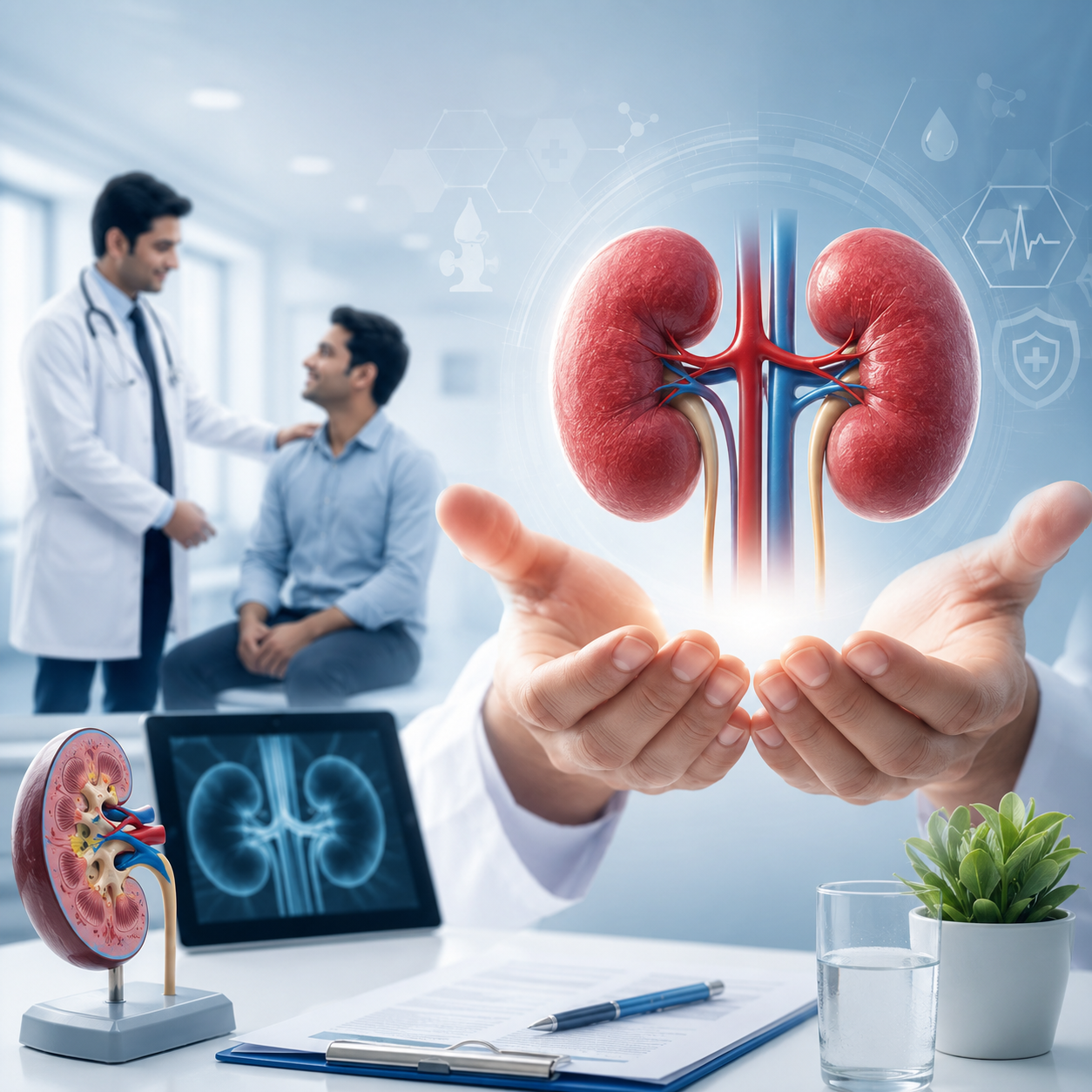
Kidney problems can affect the way your body removes waste, balances fluids, and controls important minerals. Some patients visit Priyadarshi Hospital because of high creatinine, swelling in the feet or face, changes in urination, kidney infection, kidney stones, or reduced kidney function. Others may need evaluation for acute kidney injury, chronic kidney disease, or dialysis.
As a Kidney Hospital in Modinagar, Priyadarshi Hospital focuses on careful evaluation, appropriate testing, treatment planning, and regular monitoring based on each patient's condition. A Nephrologist in Modinagar can assess kidney function and help determine the possible cause of abnormal test results or ongoing kidney problems.
Kidney disease does not always cause clear symptoms in its early stages. Therefore, people with abnormal kidney tests, diabetes, high blood pressure, or repeated urinary problems should discuss their results and symptoms with a qualified doctor.
Choosing a Kidney Hospital in Modinagar is not only about receiving treatment. Patients also need clear information about their condition, suitable diagnostic support, regular monitoring, and a treatment plan that considers their overall health.
Priyadarshi Hospital follows a patient-focused approach to kidney care. Evaluation may include a review of symptoms, medical history, blood pressure, kidney function, and relevant laboratory or imaging tests. Depending on the diagnosis, care may involve monitoring, treatment of the underlying condition, renal care, or dialysis support when medically required.
Attention is also given to hygiene, patient safety, follow-up visits, and clear guidance for patients and their families.
Patients requiring coordinated care for other medical needs can also explore the Best Hospital in Modinagar
A nephrologist is a doctor who focuses on diseases affecting the kidneys. You may need to consult a Nephrologist in Modinagar if kidney function tests are abnormal or your doctor suspects that your kidneys are not filtering blood properly.
Medical evaluation may be appropriate if you have persistently high creatinine, protein or blood in urine, swelling, reduced urination, repeated kidney problems, or unexplained changes in kidney function.
People living with diabetes or high blood pressure may also require kidney monitoring because these conditions can damage the kidneys over time.
A consultation does not automatically mean you have serious renal disease. The purpose is to understand your symptoms and test results and decide whether further investigation, treatment, or monitoring is needed.
Kidney conditions include chronic kidney disease, acute kidney injury, kidney infections, kidney stones, kidney failure, and kidney damage related to diabetes or high blood pressure.
Possible kidney disease symptoms include swelling of the legs or feet, changes in urination, tiredness, nausea, reduced appetite, or blood in urine. Kidney stones may cause severe pain in the back, side, lower abdomen, or groin. However, these symptoms can have other causes as well.
Importantly, early chronic kidney disease may cause few or no noticeable symptoms. Blood and urine testing can therefore be important for people at increased risk.
A Kidney Specialist in Modinagar can review symptoms and test results to determine what further evaluation may be appropriate.
Kidney disease diagnosis begins with understanding the patient rather than relying on one test result. At Priyadarshi Hospital, the evaluation may involve the following steps:
Not every patient requires every test. Treatment may include management of an underlying health problem, monitoring, dietary or lifestyle guidance, renal care, or other medically appropriate treatment.
Patients looking for a Kidney Hospital in Modinagar should bring previous prescriptions, laboratory reports, scans, and details of medicines to their consultation when available.
Dialysis is a treatment that performs part of the filtering work normally done by healthy kidneys. It helps remove waste products and excess fluid from the blood when kidney function becomes severely reduced.
A Dialysis Hospital in Modinagar may support patients whose doctors determine that dialysis is medically necessary. Hemodialysis uses a dialysis machine and filter to clean the blood. During treatment, patients require appropriate monitoring and attention to safety and hygiene.
Not everyone with kidney disease needs dialysis. The decision depends on kidney function, symptoms, laboratory findings, fluid balance, overall health, and the clinical situation.
Priyadarshi Hospital's kidney-care approach includes evaluation and appropriate support based on individual medical needs, with regular follow-up where required.
Acute kidney injury, or AKI, means kidney function has suddenly become worse over a short period. Possible causes include severe dehydration, infection, reduced blood flow to the kidneys, urinary blockage, certain medicines, and other underlying illnesses.
Acute Kidney Injury Treatment in Modinagar begins with identifying the likely cause and understanding how severely kidney function has been affected. Doctors may monitor creatinine, urine output, fluid balance, electrolytes, blood pressure, and other relevant findings.
Treatment varies according to the cause. For example, care for dehydration is different from treatment required for an infection or urinary obstruction.
Some patients with severe AKI may temporarily require dialysis. Recovery varies, so individual medical assessment and follow-up are important.
Kidney stones are hard deposits that form from substances present in urine. They may cause sharp pain in the back or side, pain during urination, blood in urine, nausea, vomiting, or repeated urinary problems.
Kidney Stone Treatment in Modinagar starts by assessing symptoms and identifying the stone's size and location when testing is required. Medical history, urine or blood tests, ultrasound, or other imaging may be considered according to the clinical situation.
Small stones may sometimes pass without a procedure, while larger stones, severe symptoms, obstruction, or complications can require further intervention.
Treatment is therefore selected according to stone size, location, symptoms, kidney function, and overall health. When another abdominal or surgical condition requires minimally invasive care, patients may also learn about Laparoscopic Surgery in Modinagar.
Kidney care should help patients understand both their condition and the next steps. Priyadarshi Hospital's approach may include:
A Kidney Specialist in Modinagar can help patients understand test results and discuss an appropriate care plan.
Kidney care at Priyadarshi Hospital focuses on consultation, diagnostic evaluation, kidney function monitoring, patient counselling, treatment planning, and follow-up.
Patients requiring a Dialysis Hospital in Modinagar can consult the hospital regarding dialysis evaluation and available support. Patients with sudden changes in kidney function can also seek assessment for Acute Kidney Injury Treatment in Modinagar.
Kidney conditions can sometimes overlap with other health needs. Women requiring coordinated reproductive or gynaecological care may explore the Gynecologist Hospital in Modinagar.
For fertility-related services, patients may also refer to the Best IVF Hospital in Modinagar.
Consider consulting a Kidney Specialist in Modinagar if you have persistently abnormal kidney function tests, high creatinine, protein or blood in urine, swelling, unusual changes in urination, or repeated kidney problems. People with diabetes or high blood pressure may also need periodic kidney evaluation. A doctor can determine whether further tests or specialist care are appropriate.
Early kidney disease may not produce noticeable symptoms. As kidney problems progress, some people develop swelling, tiredness, changes in urination, nausea, or reduced appetite. These symptoms are not specific to kidney disease, so diagnosis should not be based on symptoms alone. Blood and urine tests are commonly used to assess kidney health.
No. High creatinine can indicate reduced kidney filtration, but a single result does not automatically mean kidney failure. Doctors interpret creatinine along with previous results, estimated filtration rate, medical history, hydration, medicines, and other tests. A medical evaluation is useful when creatinine is unexpectedly high or remains abnormal.
Dialysis may be considered when the kidneys can no longer adequately remove waste or excess fluid, or when serious complications develop. The decision is based on the patient's overall clinical condition rather than one laboratory number alone. A Dialysis Hospital in Modinagar can evaluate patients who have been advised to discuss or undergo dialysis.
Yes, some kidney stones can pass through the urinary tract without a surgical procedure. However, management depends on the stone's size, location, symptoms, blockage, infection risk, and overall health. Kidney Stone Treatment in Modinagar should therefore begin with proper evaluation so the doctor can recommend a suitable approach for the individual patient.
Acute kidney injury is a sudden reduction in how well the kidneys work. It can occur because of dehydration, severe infection, reduced blood flow, urinary obstruction, medicines, or other medical conditions. Acute Kidney Injury Treatment in Modinagar depends on finding and managing the underlying cause while monitoring kidney function, urine output, fluids, and electrolytes.
Doctors commonly use blood tests such as serum creatinine and estimated filtration rate, along with urine testing. Urine tests may identify protein, blood, or other abnormalities. Depending on the symptoms and suspected cause, ultrasound or other investigations may also be recommended. Not every patient needs the same tests.
Yes. Diabetes and high blood pressure are important causes and risk factors for chronic kidney disease. Over time, they can damage the small blood vessels and filtering structures in the kidneys. Regular monitoring of blood pressure, blood sugar, kidney function, and urine findings can help doctors identify kidney changes and plan appropriate disease management.
If you have abnormal kidney test results, high creatinine, urinary changes, kidney stones, swelling, or have been advised to discuss dialysis, consider arranging a medical evaluation at Priyadarshi Hospital.
Patients seeking a Kidney Hospital in Modinagar can book an appointment to discuss symptoms, previous reports, kidney function, and suitable next steps with the medical team. A Nephrologist in Modinagar consultation may also be appropriate when specialist assessment is advised. Bring your recent blood tests, urine reports, scans, and current medicine list when available.